
By Dr Bibiana Chan

Empathy Gap refers to the difficulty people have in understanding or predicting emotional states—either their own future emotions or the emotions of others—especially when those emotions differ from what they feel at the moment.
This concept, introduced by psychologist George Loewenstein, explains why:
- When we are calm, we underestimate how strongly we might react when angry, stressed, or scared.
- When we are upset, we find it hard to imagine what it’s like to feel calm or content.
- When others are in distress, if we are not feeling distressed ourselves, we might underestimate how much help they actually need.
There are two common types of empathy gaps:

- Hot-to-Cold Gap: When someone in a heightened emotional state (like anger, hunger, fear) struggles to understand how they would feel or act when calm (cold state).
- Cold-to-Hot Gap: When someone in a calm state underestimates the intensity of feelings during an emotional, “hot” state.
The empathy gap can affect decision-making, relationships, communication, and even public policies—because it leads to misunderstandings about how people (including ourselves) behave under emotional pressure.
In short:
The empathy gap shows that emotions deeply influence our perceptions, and we are not as good as we think at stepping into others’ (or even our own future) emotional shoes.

1. Community Relationships:
When someone isn’t personally struggling (for example, with job loss, illness, or family stress), they might underestimate how deeply these issues affect others.
➔ Result: They may judge neighbours harshly (“Why don’t they just work harder?”) instead of offering understanding or support, which erodes trust and weakens community bonds.
2. Youth and Adults Disconnect:
Adults often forget the intensity of teenage emotions because they are in a calmer (cold) adult mindset.
➔ Result: Young people may feel misunderstood or dismissed (“You’re overreacting”), leading to resentment and a communication breakdown.
3. Public Health Behaviours:
During crises like COVID-19, people who feel healthy may underestimate the fear or vulnerability felt by others at higher risk.
➔ Result: This can lead to tensions over mask-wearing, vaccination, or social distancing, reducing collective trust and cooperation.
4. Disaster Response:
After a natural disaster, those not directly affected may find it hard to understand the ongoing trauma and needs of victims.
➔ Result: Support and donations can dry up quickly, even while survivors are still struggling deeply.
5. Mental Health Stigma:
People who have never experienced depression or anxiety sometimes underestimate how hard it is to “just snap out of it.”
➔ Result: Lack of empathy can make individuals feel isolated, ashamed, and less willing to seek help.
6. Conflict Resolution:
During arguments, each side is often stuck in their own “hot” emotional state and struggles to imagine the other’s perspective.
➔ Result: Conflicts escalate instead of being resolved with understanding.


7. Crisis Events and Collective Empathy
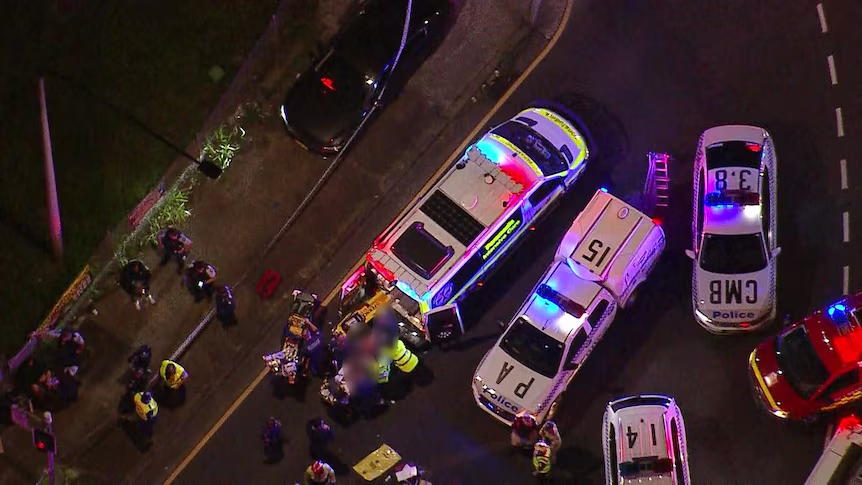
This is particularly concerning as over the past few days, a ‘repeat’ of last year’s Bondi Junction stabbing incident occurred at Melbourne’s Northland Shopping Centre. The weapon used was a machete. In addition, there were two other violent incidents—one in Parramatta involving gang-related shootings that left two men critically injured, and another in South Melbourne where a police constable shot a female driver after she drove at him during an arrest attempt of another man.
These events provoke intense public emotions: fear, anger, grief, blame. Yet the empathy gap makes it difficult to hold space for the complexity of feelings involved. How do we offer empathy—and to whom—in such situations? Can we extend empathy to both victims and responders, to communities reeling from violence, and even to perpetrators shaped by cycles of trauma or desperation?
In short:
Wherever people can’t emotionally connect across different experiences, the empathy gap can widen mistrust, loneliness, and social division.