
Circular Economy – Understanding Biodegradable Coffee Cups and Their Role in a Circular Economy
By Dr Bibiana Chan

In recent years, the rise of biodegradable coffee cups has marked an important shift in reducing our environmental footprint. Traditionally, disposable cups are made with paper coated in polyethylene plastic, making them waterproof but also non-recyclable and non-biodegradable in most waste systems. These cups often end up in landfills or incinerators, contributing to pollution and carbon emissions. However, innovative technologies from companies like NatureWorks and Smart Planet Technologies are changing this narrative.

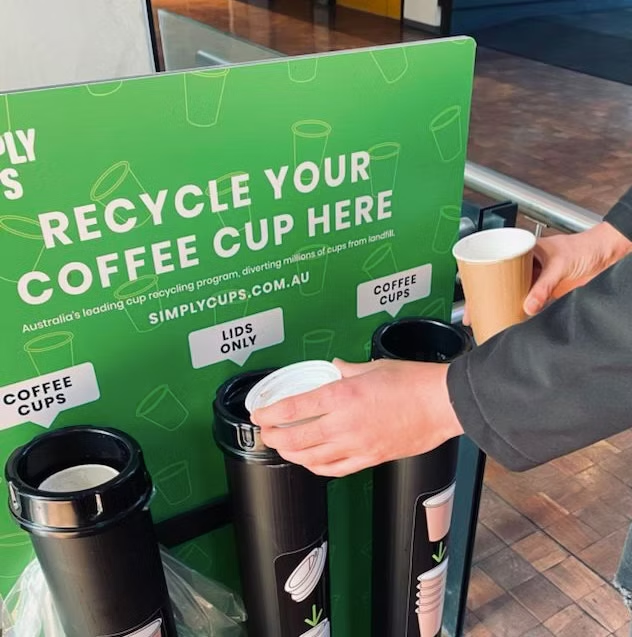
At the heart of these biodegradable cups is a new kind of lining — made from plant-based materials, such as PLA (polylactic acid) or mineral-filled biopolymer coatings. NatureWorks’ Ingeo™ 1102 is a compostable bio‑polymer derived from renewable plant sugars, allowing cups to be industrially composted or recycled. Smart Planet’s EarthCoating® uses mineral additives to maintain recyclability in existing paper streams nespsustainable.edu.auplanetark.com.
The environmental benefits are significant. By switching to compostable or recyclable cups, we reduce landfill waste, minimize microplastic contamination, and lower the carbon footprint associated with single‑use packaging. These cups also replace fossil‑fuel derived coatings, reducing greenhouse gas emissions over their lifecycle compared to traditional alternatives discovermagazine.complanetark.com.
But to build a truly circular economy, it’s not enough to recycle alone — we must also support the market for recycled materials. This means buying products made from recycled content, closing the loop from consumption back to production. Brands like icare, which produce tissue paper from 100% recycled paper, help drive demand for recycled fibre. Each purchase signals to manufacturers and waste‑management systems that recycled material has value — and that investing in collection and processing infrastructure pays off.

A circular economy thrives on the principle of “make, use, return”. Waste becomes a valuable resource. If recycled fibres go into high‑quality end products — toilet paper, cardboard, packaging, or tissues — then the materials never need to be landfilled, but instead remain in continuous use. Recycling coffee‑cup waste into new packaging is only possible if manufacturers know there’s demand for post‑consumer fibre, which products like i care tissue help create.

💡 Reforming: Beyond the Three R’s
This morning, I watched APAC interview Prof Veena Sahajwalla introduce a powerful extension to the classic “Reduce, Reuse, Recycle” mantra: Reforming. She advocates using emerging technologies to transform waste into totally different, value-added industrial materials — not just reproduce the same product type nespsustainable.edu.auplanetark.com. Through her pioneering work in micro‑recycling, waste streams like old tyres, e‑waste, textiles, and glass can become inputs for green steel, ceramic panels, and 3D‑printing filaments planetark.comdowntoearth.org.in. Reforming moves us toward 21st‑century circular manufacturing, where waste becomes not just reused, but reimagined and upgraded, enabling sustainable production that’s both innovative and locally driven.
Why This Matters
Biodegradable coffee cups, eco-friendly barrier linings, tissue paper from recycled fibre, and Veena Sahajwalla’s reforming technologies underscore how a modern circular economy requires both smart materials and smart systems. By choosing products with recycled content, we send economic signals that sustain recycling infrastructures. By reforming waste into new high-value materials, we transform residual waste streams into economic opportunity, innovation, and community resilience.
To ‘walk to talk’, CFS ordered our branded eco-pen from Cubic Promote which is an Aussie business conscious of the importance of sustainability. These ‘cork barrel pens’ with CFS’ logo will be included in the show bags for our ‘Secret Garden Event’ to celebrate Mental Health Month. The advantages of this eco-pen are as follows:

- Perfect for eco-conscious businesses and individuals
- Made from natural and renewable cork
- Sustainable alternative to plastic disposables
Whether it’s a takeaway cup lined with bio‑based coatings or a simple roll of recycled tissue, every choice contributes to closing the loop. Products like Kolar Care tissue paper, Cubmic Promote eco-pens, don’t just support sustainability — they drive the next wave of circularity. And with leaders like Prof Sahajwalla pushing the boundaries of reform, our waste can become feedstock for the industries of tomorrow.

Further reading:
Stationary made from recycled coffee cups.
Australian first road made with recycled paper.
Toilet Paper review by Choice Magazine.
Cork Barrel Pens by Cubic Promote